EN

Cotton Baby Space Adventure Sweatshirt | Plant-Dyed OEM ODM Toddler Pullover Manufacturer


- Overview
- Sustainable Toddler Sweatshirt - Custom Space Adventure
- Recommended Products
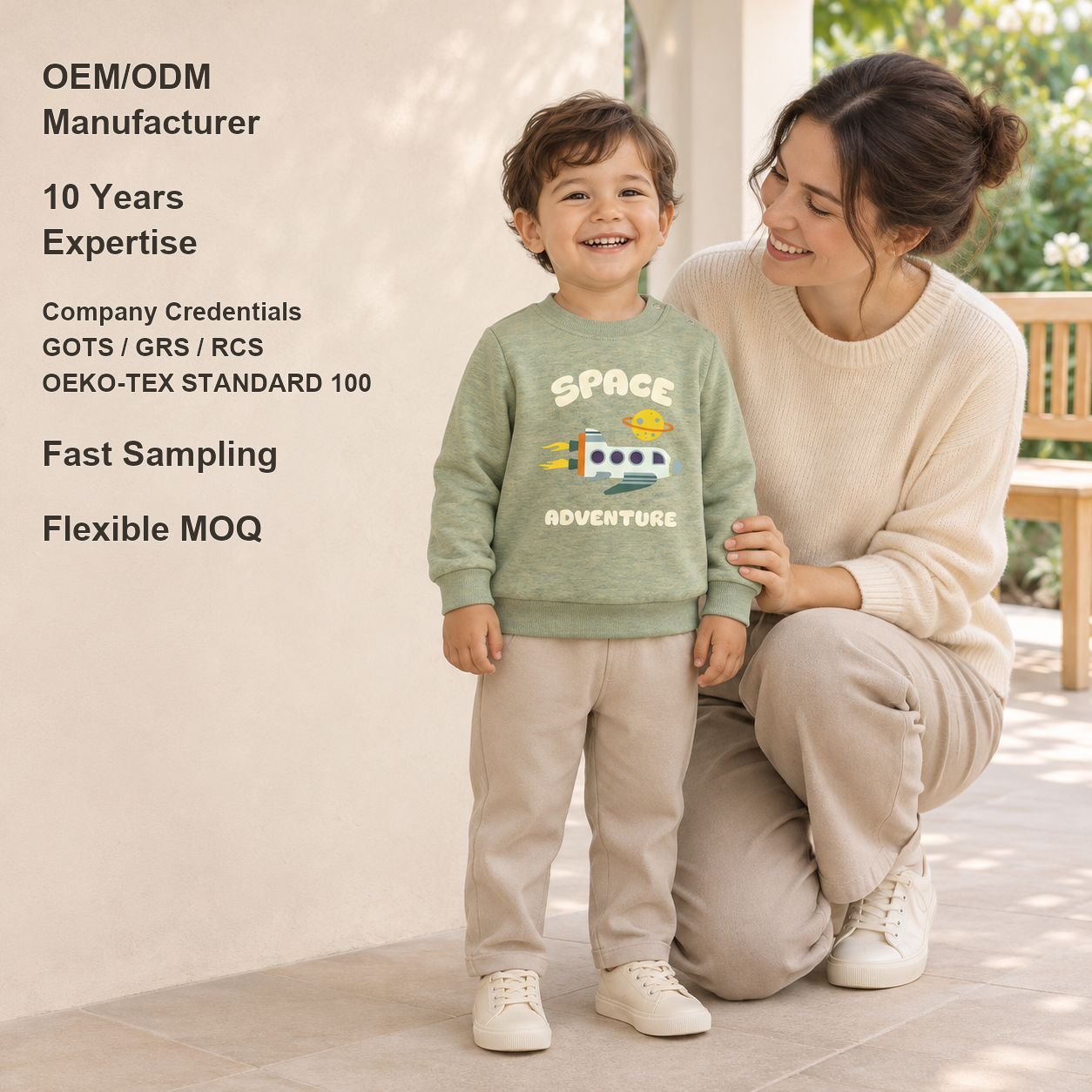
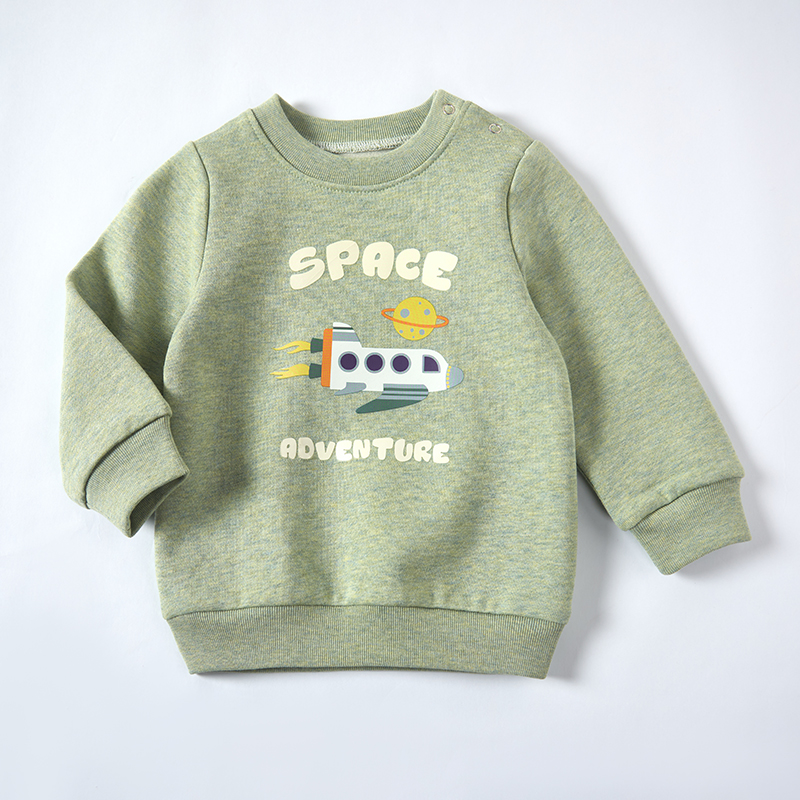
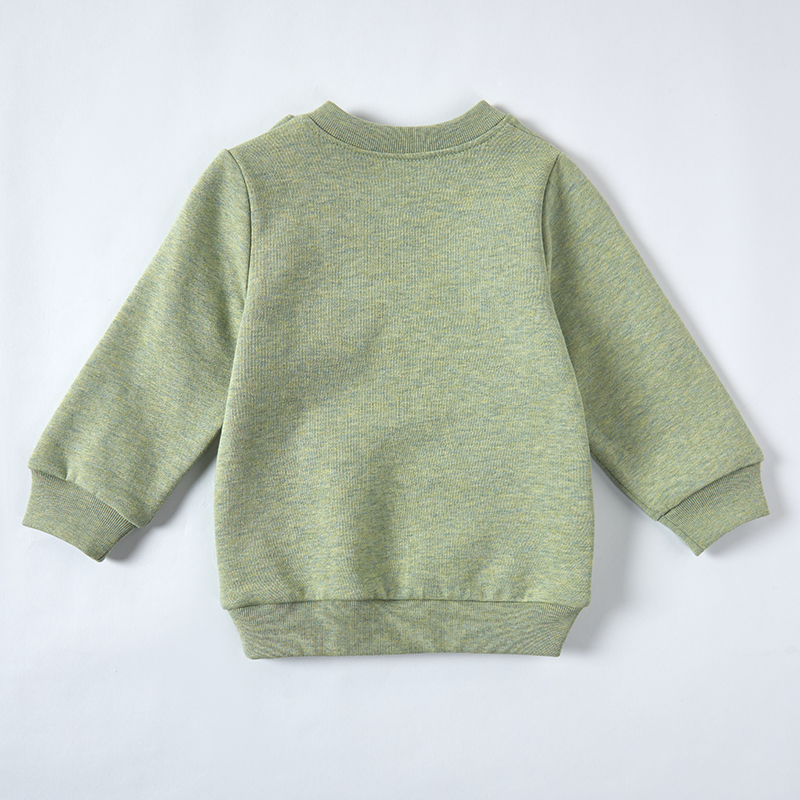
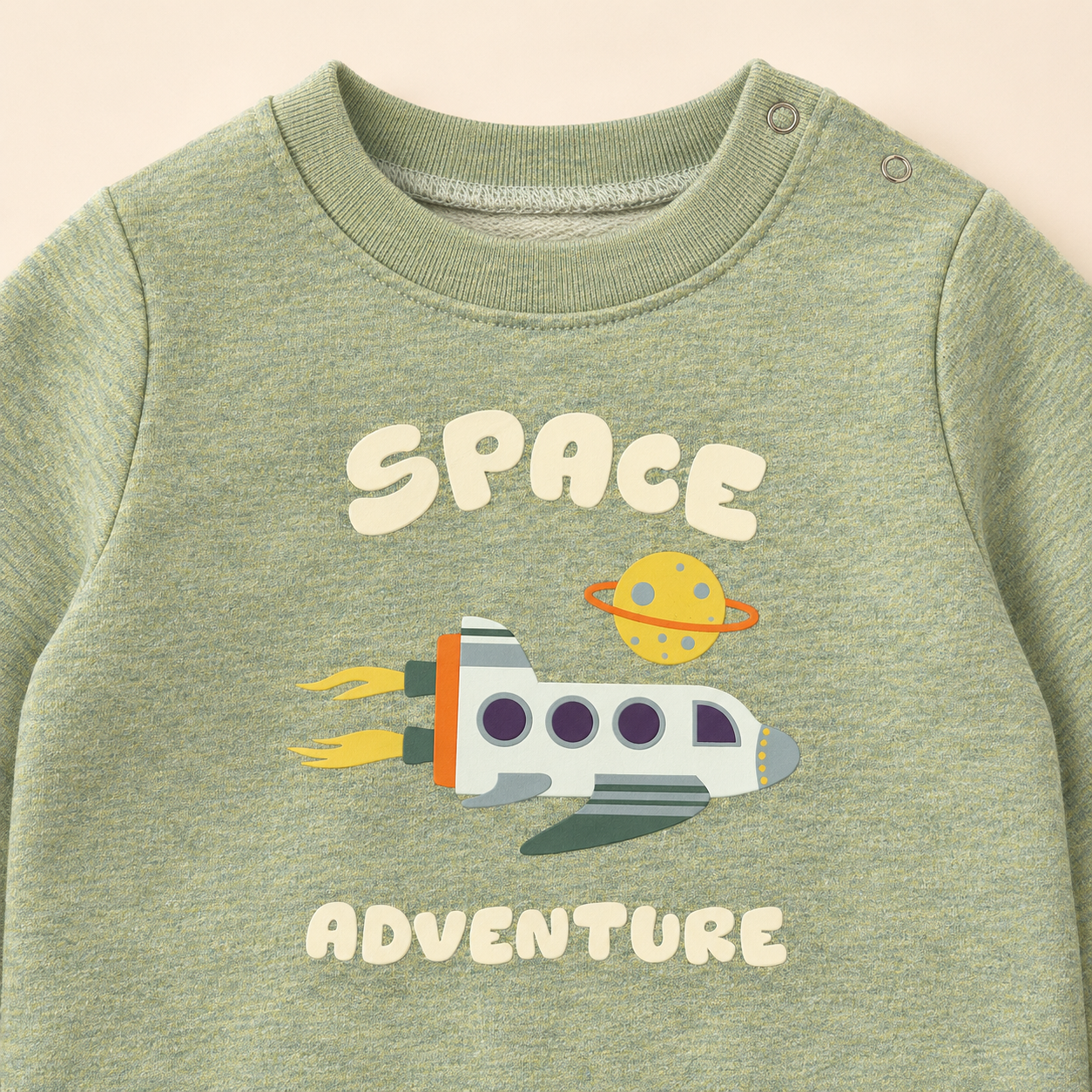
A crew-neck sweatshirt in 280 gsm brushed cotton flannelette, plant dyed to a sage green with sophora buds and Isatis indigo, closed at one shoulder with a button, rib cuffs and rib hem, and printed at the chest with a rocket and a ringed planet.
This garment carries three colouring systems, not one. The body is plant dyed, the graphic is a pigment print, and the rib is a separate yarn that was dyed on its own. Each has a different compliance path, a different way of ageing, and a different way of failing — and on an infant article all three are assessed as one piece of clothing.
At a glance

1. Three colouring systems on one garment
- The body is dyed in the bath, from two plants applied in sequence; the shade is built rather than mixed.
- The print is pigment, a film sitting on the cloth rather than a dye inside it. That means different limits, different fastness and a different failure: it can crack or lift where a dye cannot.
- The rib is a separate yarn dyed on its own. Rib is knitted from a different yarn count to give it recovery, and it is usually dyed in a separate lot, so matching it to a brushed plant-dyed body is a colour problem of its own.
- A buyer asking whether this is Class I is really asking three questions at once. The dyed body, the printed area and the rib are all part of the article, and each is a place where a different substance could fail the limit.
- They also age differently. The body shifts hue as the two plant dyes break down, the print dulls at the surface, and the rib — often the most-washed part at the cuffs — relaxes and greys first.
2. Indigo: the one that can rub off
- Isatis indigo is a vat dye. It is insoluble until it is reduced in an alkaline bath, applied in that soluble form, and then oxidised back to blue in the air; the blue is built in rings near the surface rather than distributed through the fibre.
- That is why indigo can transfer, not only fade. A garment in this shade is the one place on the article where colour can physically move onto something else — skin, a nappy, a car seat — when it is rubbed while damp.
- On an infant, damp is normal. Dribble, a wet nappy and a damp hand all wet the cloth at the places that rub, and wet rubbing is the harder of the two crocking tests.
- So the shade is reached with the fewest dips that will get there. Each extra dip adds surface dye that can come off again; the dip count is fixed at the minimum that reaches the approved shade, and soaping removes the loose fraction before the garment is cut.
- The same behaviour explains the lightening at the cuffs. The colour that leaves the cuff in wear is the colour that would have come off on a test cloth, which is why crocking and wear fading are checked as one question rather than two.
3. The two dyes age in different directions
- Indigo lightens; sophora yellow dulls. Indigo loses depth and holds its hue; the yellow fraction oxidises toward beige. Over a season the green does not simply go paler — it goes greyer, because one half is losing strength and the other is losing warmth.
- That is why the ratio is a durability decision. A green built mostly on yellow fades toward khaki; a green built mostly on indigo fades toward blue-grey. Which direction is acceptable is written into the approval rather than discovered by the customer.
- Light and washing pull at different halves. Washing takes the loosely fixed fraction of both; light attacks the yellow faster than the indigo. The two are tested separately and neither is read off the other.
- The brushed face ages faster than the back. Raised fibre exposes more surface to light and friction, so the shoulder and the outside of the sleeve move before the inside placket does.
- A shade that is never flat to begin with makes all of this harder to judge, so approval is taken on a dyed and brushed piece against a physical reference, not against a screen.
4. Class I: the print is where the metals are
- A pigment print is a film of pigment, binder and thickener, and pigments are where metals sit: titanium and zinc in the whites, and cadmium, lead or chrome in some yellows and oranges if the ink is not specified.
- The cream lettering and the yellow rocket are the parts to specify. A white or cream on a green ground is usually titanium dioxide, which is acceptable; a bright yellow or orange is where a restricted pigment can enter the file, so the ink set is named rather than "matched to the artwork".
- The printed area is part of the article. For an infant garment it is assessed against the same Class I limits as the dyed cloth — azo colourants, heavy metals, formaldehyde — plus the plasticiser restrictions that apply to prints, and it is tested as a printed panel rather than as ink.
- Adhesion is a separate question from chemistry. On a brushed ground the ink has less mechanical key than on a flat one, so cracking and lifting are tested on the brushed face after washing, at the cuff and hem where the cloth flexes most.
- Placement matters at this age. The print sits at the chest, which is exactly where a baby's hands and mouth arrive when the garment is held up, so the printed area is treated as a contact surface in the same way the collar is.
5. 280 gsm brushed cloth on an infant
- Brushing is what makes 280 gsm wearable. The raised fibre traps air and gives warmth the same weight of flat cotton would not, and it softens the hand to the point where the garment feels like a blanket rather than a sweatshirt.
- At this weight it is an outer layer. It is built to go over a bodysuit in a cool room, not against the skin in a warm one; the block allows for the layer underneath rather than being cut close.
- The rib seals the openings, which is both the point and the limit. Cuffs and hem hold warmth in; the neck opening is then the only vent, which is why it is sized on a head form rather than narrowed for looks.
- Brushed pile mats if it is washed hot. The care label states a cool wash and no tumble drying, because heat felts the pile and the garment loses both its softness and its warmth in one cycle.
- A heavy brushed cloth also takes longer to dry, so the garment is sold as a layer that gets worn and aired rather than one that is washed daily.
6. Size: 6M–36M, and what the block has to hold
- The range sits inside Class I, with 6M, 12M and 24M clearly under 36 months and 36M assessed as Class I because the article can be worn by a child under that age.
- The shoulder button is the entry. One button at the shoulder opens the neck enough to pass an infant head through a ribbed crew neck, and the opening is measured on a head form with the button closed, since that is the value the pattern is set to.
- Body length is cut to clear a nappy, so the sweatshirt does not ride up when a baby is picked up under the arms.
- Sleeve length is checked with the arms extended, because a cuff that reaches the wrist at rest leaves the wrist bare the moment the arm goes out.
- The sample is checked sitting and being lifted, since the rib hem and the shoulder seam are where a sweatshirt on a baby shows a fit fault first.
7. Customization, sampling and what we need to quote
- Neck. Crew with shoulder button as shown; a plain crew with a wider neck; a lap shoulder with no hardware.
- Print. Chest graphic as shown; a smaller badge print; an embroidered patch instead of a print.
- Shade. Sage green as shown; a deeper green with more indigo; a yellow-only version with no indigo.
- Trim. Rib cuffs and hem as shown; a self-fabric cuff; a straight hem.
- Weight. 280 gsm as shown; a lighter 240 gsm for a summer layer.
- Packing. Polybag with size sticker; hanger; woven or printed label, satin care label, hangtag.
- Sampling. 3–7 days from a confirmed tech pack, with a dyed and brushed strike-off, a crocking test on the indigo, a wash trial on the printed panel and a shade check against the reference after washing.
- Bulk lead time. 30–60 days from approval by quantity and dyebath schedule; the bath is planned per batch, so a split delivery is quoted as two batches.
MOQ: 300 pcs for a custom development — custom cloth, shade, print or fit; 50 pcs for a decorative process added to a stock body; 100 pcs for stock cloth with your own logo and label. Mixed colour and size orders are quoted per order. These are standing programme terms, confirmed against the current quotation.
Production runs with our production partner, Suzhou Shelmin Trade Co., Ltd.: 7,200 m² workshop, 8 lines, 200 staff, 6,000 pieces per day. Design confidentiality is held under NDA; buyer patterns, shades and prints are not re-used.
To quote, we need: target market and the Class I tests it requires; the ink set for the print, named rather than matched; the mordant route for the yellow and the dip count for the indigo; whether the rib is dyed to match or bought in; cloth weight and whether it is brushed before or after dyeing; packaging; and whether certification runs in your brand name.