EN

Custom Cotton Baby Suspender Dress Plant-Dyed Toddler Pinafore Skirt Sustainable OEM ODM Baby Clothing Manufacturer


- Overview
- Plant-Dyed Cotton Baby Pinafore Skirt OEM ODM
- Recommended Products
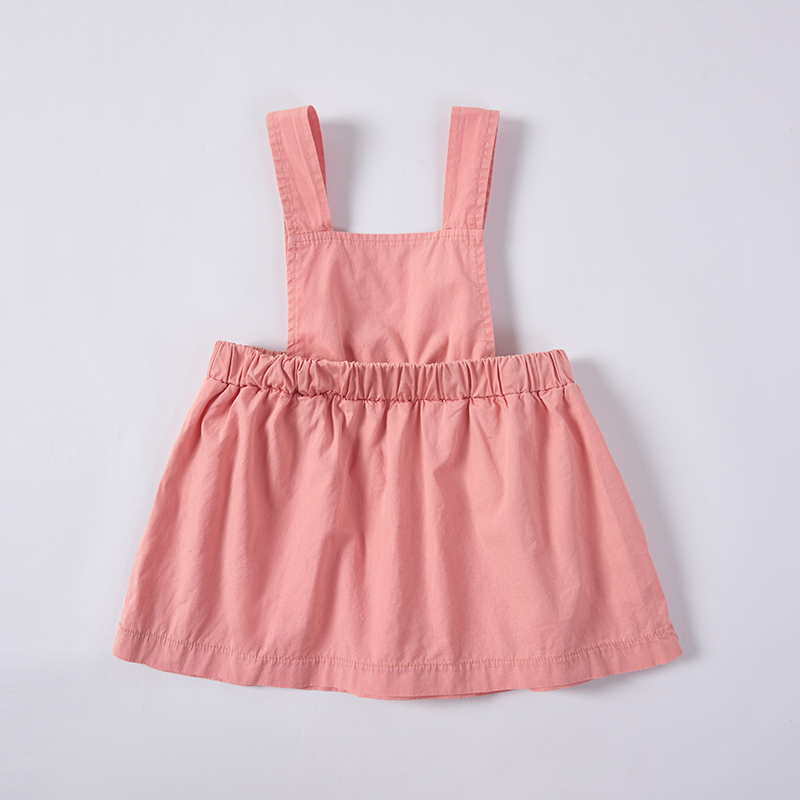
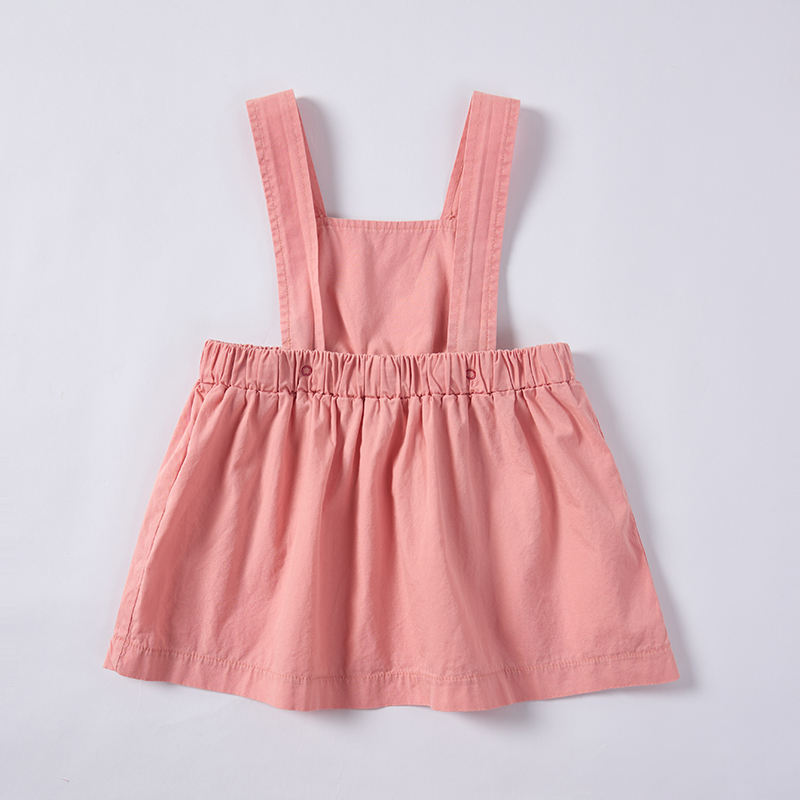
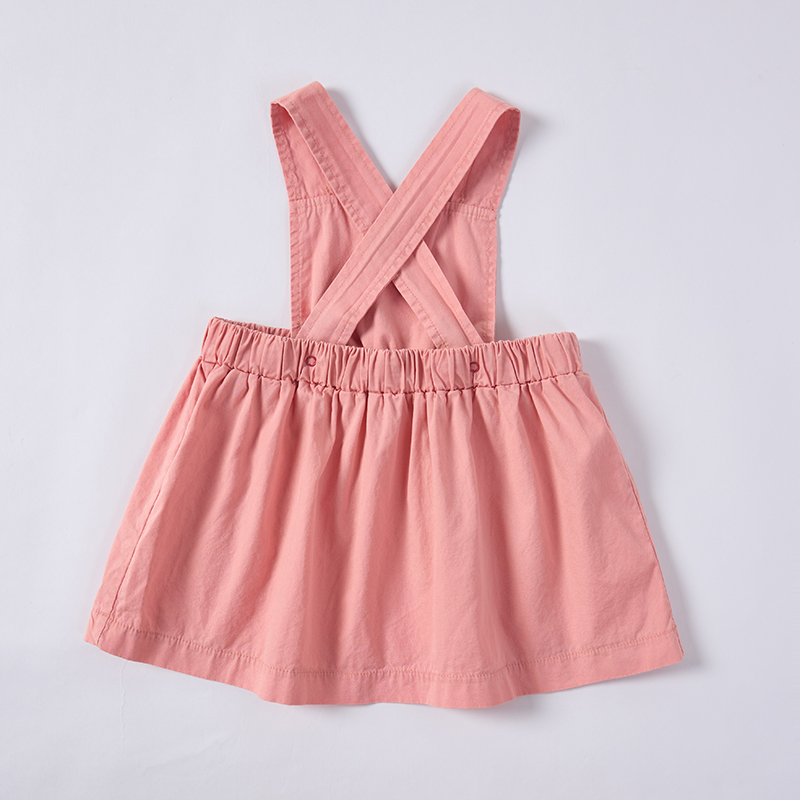
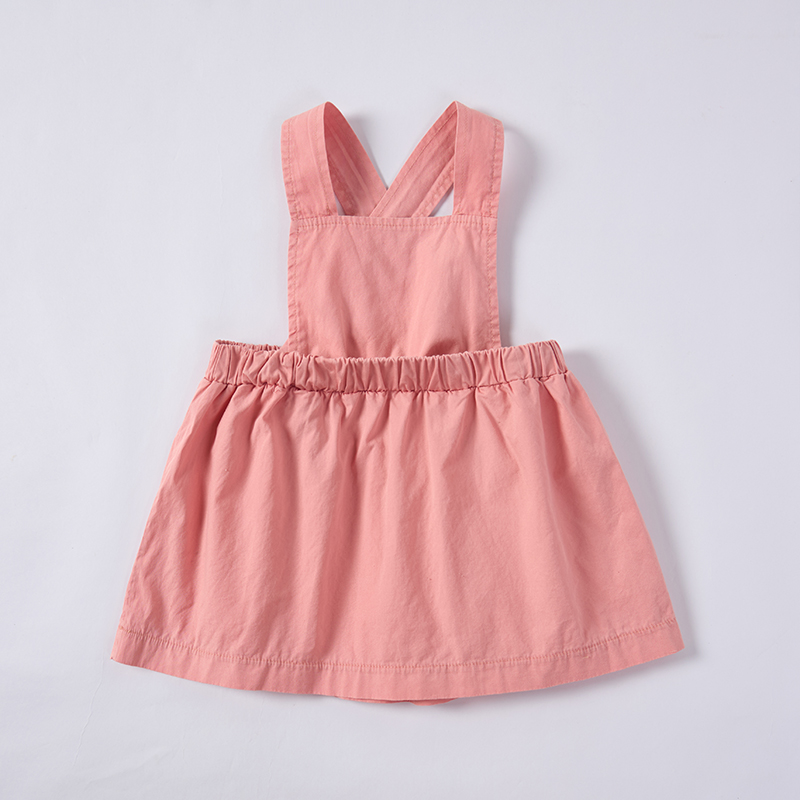
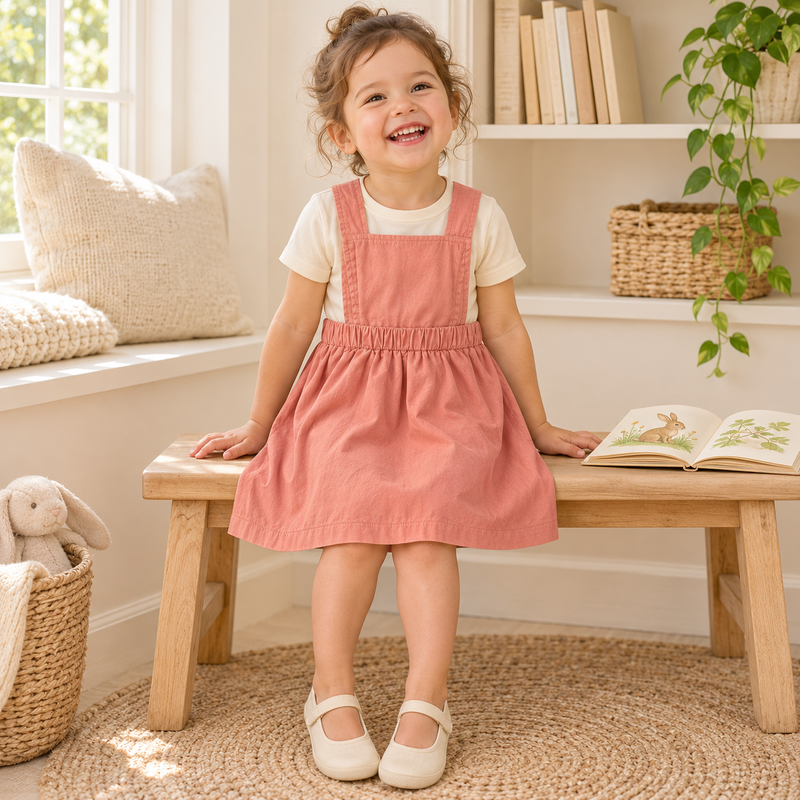
A pinafore dress in 125 gsm cotton poplin, plant dyed to an even salmon pink with logwood and madder: a square bib panel, two wide straps, an elasticated waist and a gathered A-line skirt, with the straps buttoned at the back waist.
This shade is built from two plants and no third material, which moves the work into the dyehouse: the ratio of logwood to madder, the number of dips, the wetting before the bath and the soaping that clears what has not fixed. Those four are what this page sets out, because they are also what a buyer sees on the third wash — a salmon that is still salmon, and still even across the skirt.
At a glance
1. Cloth: poplin takes a shade at its face
- Poplin is a tight, fine plain weave, and a tight weave takes colour where the cloth is wet — which is why the wetting-out before the bath is part of the recipe on this cloth rather than a formality.
- The cloth has no give, so the pinafore is entered through its openings — the elasticated waist and the buttoned straps — and neither is adjusted afterwards.
- 125 gsm is light enough to gather without bulk and dense enough to hold the bib flat, which is why the whole dress is one cloth and no interfacing appears in the body.
- The face is crisp, and a plant colour on a crisp face looks paler than the same colour on a soft one, because there is no pile to deepen it; the shade has to be built into the cloth rather than added on top.
- Every stitch line is visible on this cloth, so hem and waistband tension are set on a seam sample before the run rather than corrected at the end.
2. Where the work goes with two plants
- Cotton takes these two colourants more readily when the fibre is prepared for them. A tannin or a metal mordant is the usual preparation; where an order is written with two plants, that preparation is carried in the bath instead.
- So the specification sits in four numbers: the ratio of logwood to madder, the number of dips, the dwell at temperature, and the soaping stage. Each one is written down and each one is repeated on the next batch.
- More dips is the usual route to depth. Colours built by repeated short dips come up more evenly than one long bath, because each dip re-wets the whole panel before it takes more colour.
- The proportion is what lands the salmon. Logwood gives a violet and madder a warm red; together they give the shade here, and the ratio is what holds it between the mauve and the orange side.
- Neither plant is a standardised colorant, so the recipe is expressed against a reference batch and the batch record is the document that travels with the order.
3. Evenness is the target on this garment
- This is a flat shade, and a flat shade is made on purpose. On a plain ground there is nothing for unevenness to hide behind, so levelness is built in at three points: wetting, bath, soaping.
- Wetting is the first control. A tight poplin wets unevenly if it enters the bath dry, and a dry patch takes less colour than a wet one; the cloth is wetted out and relaxed before it meets the dye.
- Liquor ratio and movement are the second. A generous bath and constant movement give the fold and its inside the same exposure, which is what keeps a panel even after it is gathered.
- The third is the soaping. A full soaping clears what has not fixed, so the shade that reaches the cutting table is the shade that stays, rather than one that shifts as the garment is worn and washed.
- Levelness is judged on the gathered panel, not flat. Gathering compresses the cloth below the waistband, so a shade that looks uniform on a flat cutting is compared with itself at two densities once it is sewn.
- The shade is approved against a physical reference under two light sources, because a salmon on poplin shifts between daylight and shop lighting more than a deeper shade would.
4. The waist: elastic, two buttons, and the strap that carries the dress
- The waistband is elasticated and the straps button onto it. The elastic sets the fit and the buttons hold the bib up, so the two are specified together: a band that is right but buttons in the wrong place leaves the bib hanging.
- The buttons need a stable point. A button sewn straight into a gathered elastic band has nothing under it that stays still, so it sits on a small interfaced tab or on a flat section let into the band, and the buttonhole is checked after repeated fastening.
- Buttons are small parts and are tested as small parts at the retention force the market requires — 70 N is the figure we work to for buttons and snaps — with the button, its thread and the tab assessed as one unit.
- Two positions are the growth allowance. Where a second button position is offered, the distance between the two is what buys the extra months, and both are checked with the strap fastened rather than only the one used on the sample.
- The straps carry the whole dress. A pinafore hangs from two points, and on a baby who is lifted under the arms those two points take the load, so the strap end is reinforced where it meets the button.
- The bib is a flat panel on a gathered garment, so it is cut without a dart and the straps are set wide; a narrow pair pulls the bib into a V and the square corner is lost.
5. The hem and the gathers
- The hem is a turned band with a visible stitch line, which on a 125 gsm poplin is a tension test as much as a finish: too tight and the hem cups, too loose and it flares.
- The gather distribution is set from marked quarters. The skirt is wide relative to the waistband, so an uneven distribution puts the volume on one hip, and on a plain cloth that reads immediately.
- Gathering is done on a slightly relaxed tension, because a gathered seam sewn under tension opens into a wave after the first wash on a cloth this light.
- The waistband seam is the heaviest line on the dress. It carries the whole skirt, so the allowance is pressed down into the skirt and the band is kept narrow enough that it does not add a second bulk line above the gathers.
- Stitch density is set per cloth. Poplin at this weight puckers at a high stitch count and gaps at a low one, so the density is fixed on a seam sample rather than carried over from a heavier cotton.
6. Size: 6-36M, and the waist is re-set at each step
- The range runs 6-9M, 9-12M, 12-18M, 24M and 36M. At this age a three-month step is a real size, since a baby's rise and torso change more in three months than a school-age child's change in a year.
- The waistband is re-set for every size, not scaled. The elastic length, the band height and the button positions are each set from the child's waist, because the nappy changes the waist far more than the sizing chart suggests.
- Class I applies across the range, with 6-9M, 9-12M, 12-18M and 24M clearly under 36 months and 36M assessed as Class I because the article can be worn by a child under that age.
- The bib depth grades with the torso, so the square sits at the same place on the chest across the range rather than riding up on the larger sizes.
- The sample is fitted sitting and standing, with bib, strap length and waistband checked together; a pinafore that is right standing can lift at the bib in a pram.
7. Customization, sampling and what we need to quote
- Bib. Square bib as shown; a curved bib; a crossed back.
- Straps. Buttoned at the back waist as shown; fixed straps with a side opening; a tie-free wrapover.
- Waist. Elasticated as shown; a flat waistband with a side zip.
- Skirt. Gathered A-line as shown; a pleated skirt; a tiered skirt.
- Shade. Even salmon as shown; a deeper shade with more logwood; a redder shade with more madder.
- Finish. A softener as quoted; an unsoftened hand where the crisp face is wanted.
- Packing. Polybag with size sticker; hanger; woven or printed label, satin care label, hangtag.
- Sampling. 3–7 days from a confirmed tech pack, with a dyed strike-off, a levelness check on a full skirt panel, a wash trial on the shade and the hand, and a button pull test on the tab.
- Bulk lead time. 30–60 days from approval by quantity and dyebath schedule; the bath is planned per batch, so a split delivery is quoted as two batches.
MOQ: 300 pcs for a custom development — custom cloth, shade, trim or fit; 50 pcs for a decorative process added to a stock body; 100 pcs for stock cloth with your own logo and label. Mixed colour and size orders are quoted per order. These are standing programme terms, confirmed against the current quotation.
Production runs with our production partner, Suzhou Shelmin Trade Co., Ltd.: 7,200 m² workshop, 8 lines, 200 staff, 6,000 pieces per day. Design confidentiality is held under NDA; buyer patterns, shades and prints are not re-used.
To quote, we need: target market and the Class I tests it requires; whether a mordant is used and which, given that no tannin is specified; the ratio of logwood to madder and the number of dips; the soaping stage; whether a softener is in scope; poplin weight and sett; the button material and whether a second position is offered; packaging; and whether certification runs in your brand name.