EN


Girls' Cotton Eyelet Lace Dress with Plant-Dyed Pink Finish | Sleeveless Floral Embroidered Summer Dress | Custom Kidswear OEM & ODM Manufacturer


- Overview
- Plant-Dyed Cotton Eyelet Lace Dress for Girls
- Recommended Products
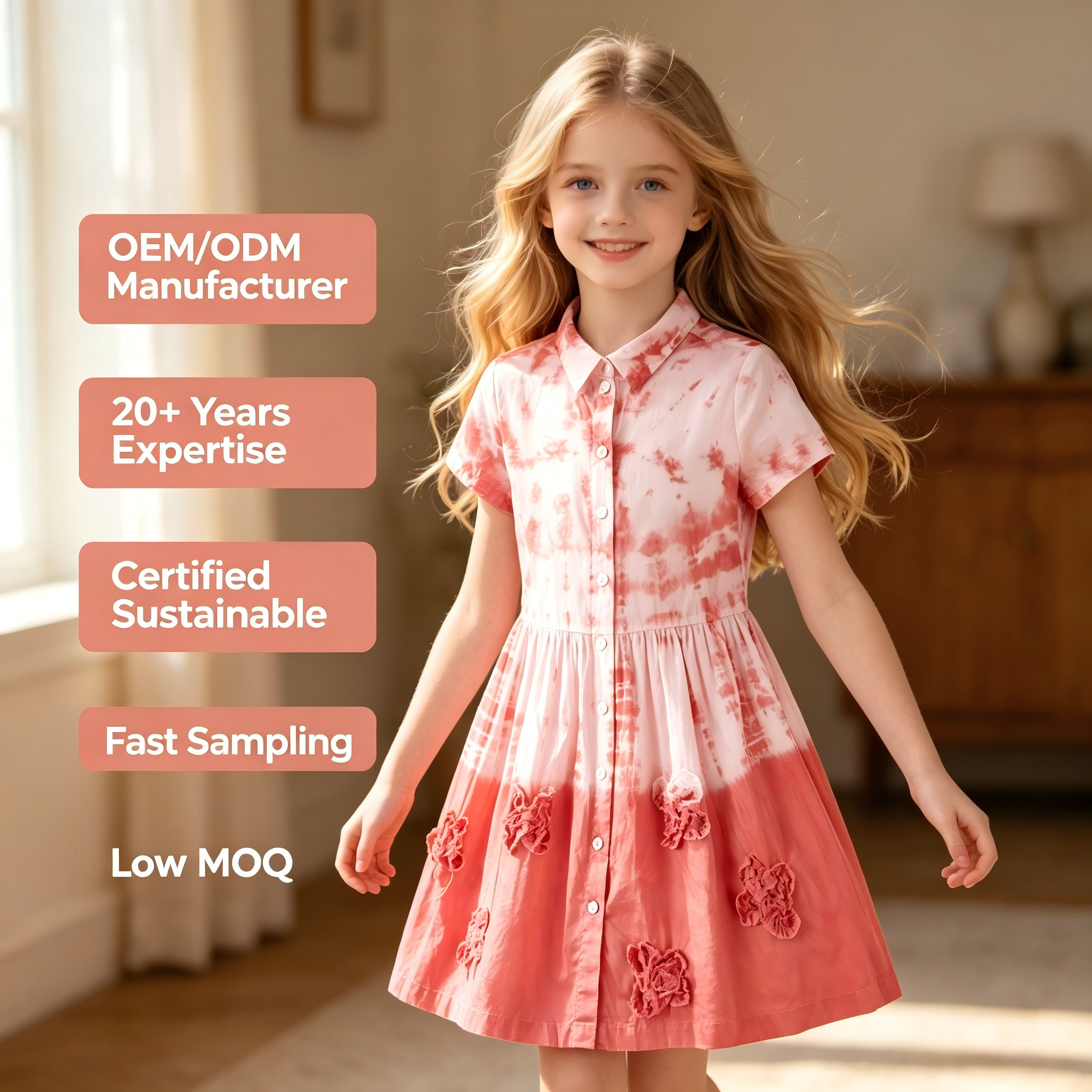
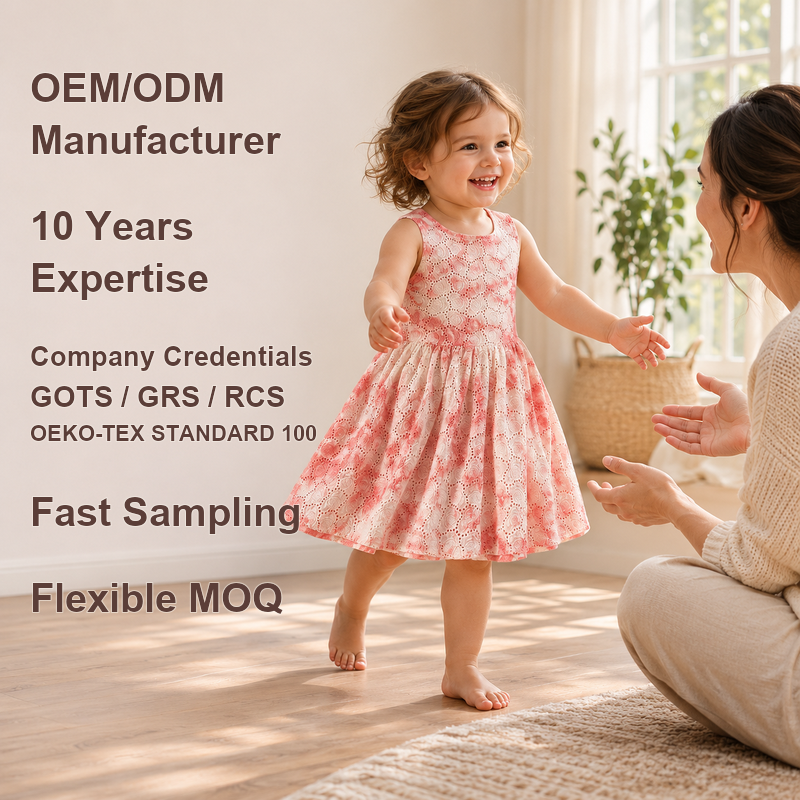
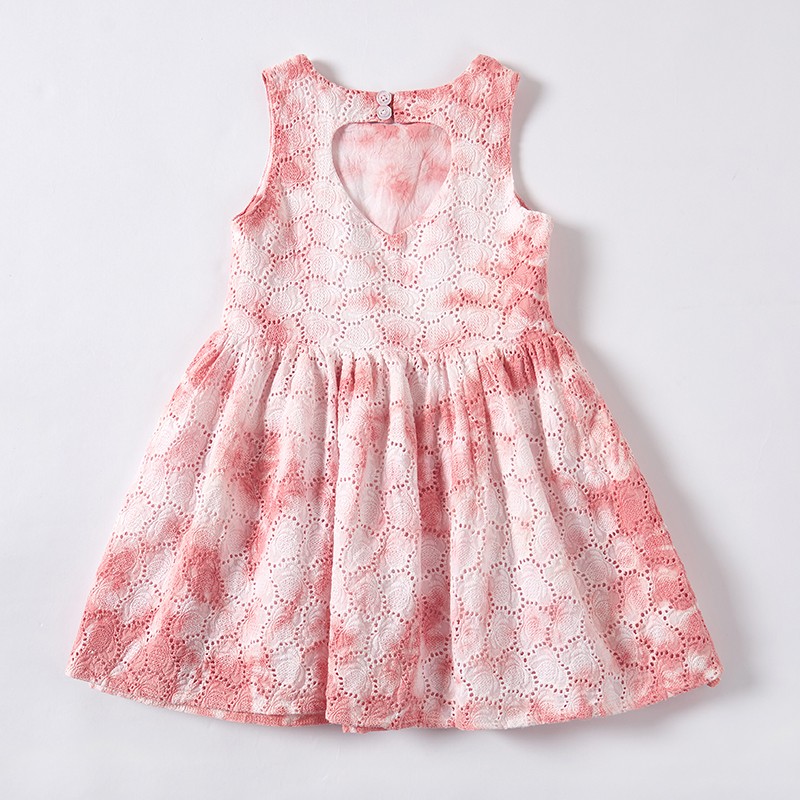
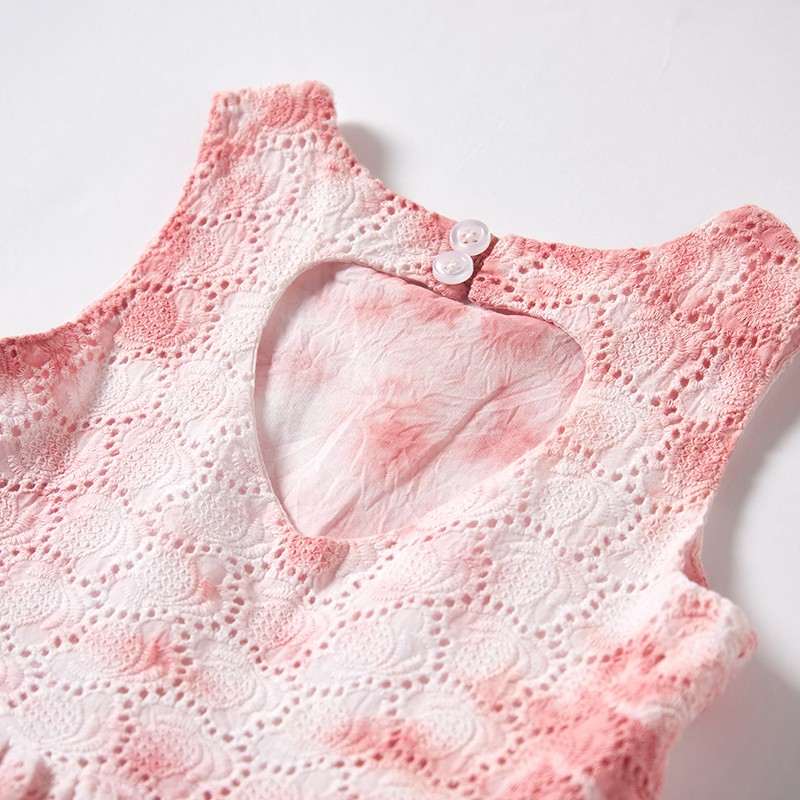
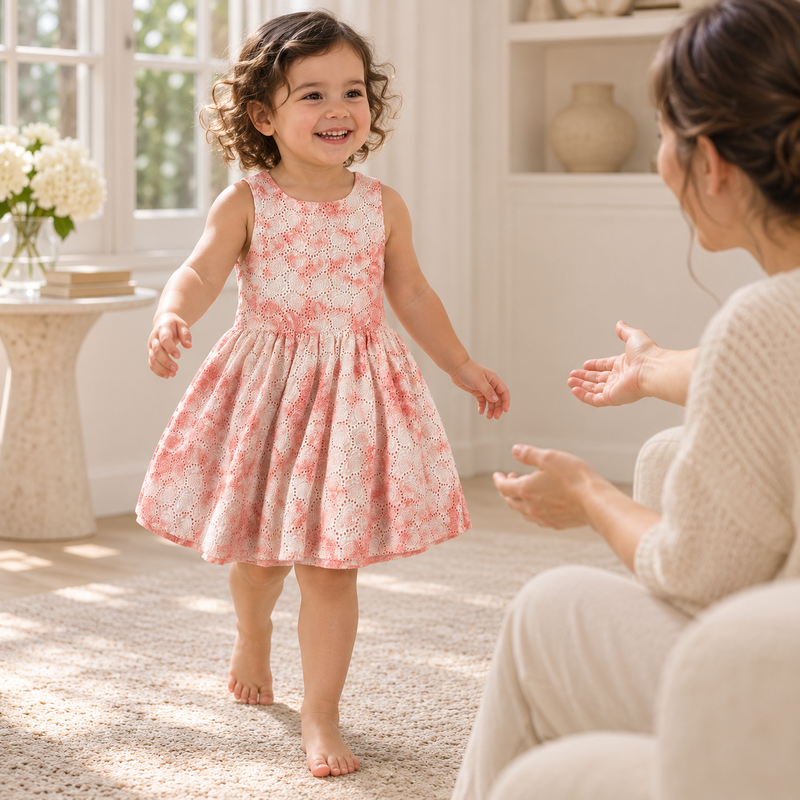
A sleeveless fit-and-flare dress in a 100% cotton eyelet lace, dyed with logwood (苏木) and madder (茜草) to a mottled rose on an undyed cream ground: a shaped bodice, a gathered skirt from the waist seam, and a back keyhole closed with a single button.
Eyelet is two cloths in one: a ground and an embroidery. They take a plant dye at different rates, which on a mottled colour reads as a second layer of texture — and that is the effect this style is bought for.
At a glance
1. Fibre: cotton eyelet, and why the embroidery behaves differently
- Eyelet is a ground cloth with an embroidery laid on it. The two yarn systems take dye at different rates, so the embroidered flower sits a tone away from the ground; with a plant dye that difference becomes part of the surface rather than a fault.
- The openwork lets the liquor through. Holes in the pattern give the dye a path into the cloth, which is why an eyelet carries a mottled colour evenly and does not streak along the embroidery lines.
- 100% cotton, no elastane inside it. The dress holds its shape through the cut rather than through stretch, which is what makes the back opening and the bodice fit the two decisions that matter.
- Eyelet has a direction. The motif runs in rows and the pattern is read the way it is cut: bodice and skirt are marked so the rows stay level around the body and the seam hides between two rows.
- Weight is fixed on the tech pack. A light eyelet drapes the skirt beautifully and needs a firmer bodice; a heavier one holds the waist seam flatter. The weight is agreed before sampling so the two panels behave as one dress.
2. The hem: what an openwork cloth offers
- Two ways to finish the hem, and they read differently. A rolled narrow hem trims the pattern clean and gives a crisp edge on a gathered skirt; a scalloped border, where the lace carries one, is used straight and saves the hem operation but locks the cutting layout.
- A gathered skirt suits the rolled hem. Gathering pulls a scalloped edge out of shape at the folds, so on this silhouette the clean edge is the one that holds the line of the photo.
- The hem depth is set on the washed sample. A rolled hem on a light eyelet draws up in the wash if the allowance is too generous; the depth is matched to the weight rather than to the pattern.
- Cutting follows the motif rows. Panels are laid so the embroidered rows sit parallel to the hem on the finished dress; a panel cut off the row reads as a tilt through the gathers.
- The waist seam is finished flat against the body. The skirt is gathered into a seam that is pressed down and bound or overlocked soft, because on an unlined dress that seam sits against bare skin.
3. Bodice and back opening: fitting without stretch
- The back keyhole is the way in. Without elastane the dress does not stretch over a head, so the keyhole plus the button opens the neckline enough to dress a child; the opening depth is tested on a head form at 2Y and at 8Y.
- A single button is the only hardware on the dress. It is attached and tested as a small part, with the buttonhole worked tight enough that the opening does not creep open in wear.
- The armhole is where a sleeveless dress is judged. Armhole depth and the binding tension are set together: too deep and the dress shows underneath, too tight and it cuts into the arm when the child reaches up.
- The bodice is shaped, not elastic. Waist and chest are set on the graded spec, with the waist seam marking the drop point; a bodice cut straight from the chest reads as a sack on a small child.
- Seams and needle control. French or overlocked seams finished flat, with the armhole and neckline edges clean; 100% needle detection on finished pieces, one-for-one exchange at every break with the machine stopped, work within 2.5 m re-screened twice, needle-free area enclosed, 2 m deep, single entry.
4. The dye: logwood and madder through an openwork cloth
- Logwood (苏木) and madder (茜草) work as one bath. Logwood heartwood moves from violet to blue-black as pH and water change; madder root brings the rose and brick tones. On a cream cotton ground they give the mottled pink in the photo.
- Cotton holds plant colour through the tannins in the dyestuff. This recipe works that way, with no added mordant: the bath is logwood, madder and water, and the depth that comes out is the depth the plants give.
- The embroidery reads half a step off the ground. Ground and embroidery wet out differently, so the flower carries a slightly different value; on this dress that is the signature of a plant dye over an eyelet, and approval is taken on a close-up so the effect is chosen rather than tolerated.
- Mottle and motif are read together. A broad streak running across an embroidered row is what makes the dress look hand-dyed; the reference photograph includes a close-up of one motif so scale and strength are agreed.
- Packing, handling and drying set the pattern, and all three are recorded so a repeat order can be matched to the same reference.
5. Colour control: buying a range, not a shade
- The approval object is a range. Depth, mottle scale and the amount of cream left showing are agreed against photographs of front, back and a motif close-up from one accepted piece, plus a physical master sample.
- The batch is the unit of consistency. Dyebath volume, fabric weight per batch, temperature curve, dyestuff lot and water are recorded; 30–50 dresses is the working batch size on a lace of this weight.
- Bodice and skirt are cut from the same batch, so the two panels of one dress never sit a shade apart at the waist seam.
- Deeper shades are a different recipe. Depth on cotton comes from dyestuff and time; a deeper rose is quoted after a dye trial rather than by lengthening the bath.
- A lining is dyed to the ground, not to the mottle. Where a cotton lining is added, it is matched to the cream ground so the colour still reads from the outside.
6. Size: 2Y–8Y, and a line at 36 months
- The range steps across two chemical classes. 2Y is a child under 36 months and is assessed as Class I; 4Y and above is Class II. The certificate set is issued to cover both, or the range is split into two orders with two limit sets.
- Age is the label, height is the spec. A 2Y and a 4Y differ more in height than in chest, so the sizes are graded on height with the chest carried as a secondary measure.
- Skirt length takes the largest share of the grade. A dress that grades flat in length reads as a tunic at 8Y; the waist seam stays put and the skirt grows below it.
- The armhole and neckline are re-measured at every size, because both are fixed by the cut rather than by stretch.
- The keyhole depth is checked per size, so the opening stays adequate for a head and discreet on the body.
7. Customization, sampling and what we need to quote
- Sizes. 2Y, 4Y, 6Y, 8Y as quoted; a 12M version quoted separately under Class I; a 10Y extension on request.
- Lining. Unlined as shown; a cotton voile lining; a bodice-only lining.
- Hem. Rolled hem as shown; a scalloped border where the lace carries one; a taped hem for a crisper edge.
- Closure. Keyhole with one button as shown; a two-button placket; a concealed back zip for the larger sizes.
- Skirt. Gathered as shown; a fuller gather; a tiered skirt; a straight A-line without gathers.
- Mottle and colour. Broad streaks or a finer break; a madder-heavy brick; a logwood-heavy violet; a deeper shade quoted after a dye trial.
- Packing. Sold alone or in a gift box; polybag with header, hanger card; woven or printed label, satin care label, hangtag.
- Sampling. 3–7 days from a confirmed tech pack plus a dye trial; a new shade, a new mottle or a hem change adds a round, and the trial is booked against a batch so what you approve is what runs.
- Approval includes one wash, where the waist seam, hem draw-up and the embroidery's colour are checked together.
MOQ: 300 pcs for a custom development — custom fabric, dye recipe, colour or fit; 50 pcs for a decorative process added to a stock body; 100 pcs for stock fabric with your own logo and label. Mixed colour and size orders are quoted per order. These are standing programme terms, confirmed against the current quotation.
Production runs with our production partner, Suzhou Shelmin Trade Co., Ltd.: 7,200 m² workshop, 8 lines, 200 staff, 6,000 pieces per day. Design confidentiality is held under NDA; buyer patterns and colourways are not re-used.
To quote, we need: target market; whether the 2Y size stays in the range; the mottle scale you want, with a reference photo if you have one; confirmation that the no-mordant recipe is fixed; whether the dress is lined; the hem treatment; packaging; and whether testing runs in your brand name.